
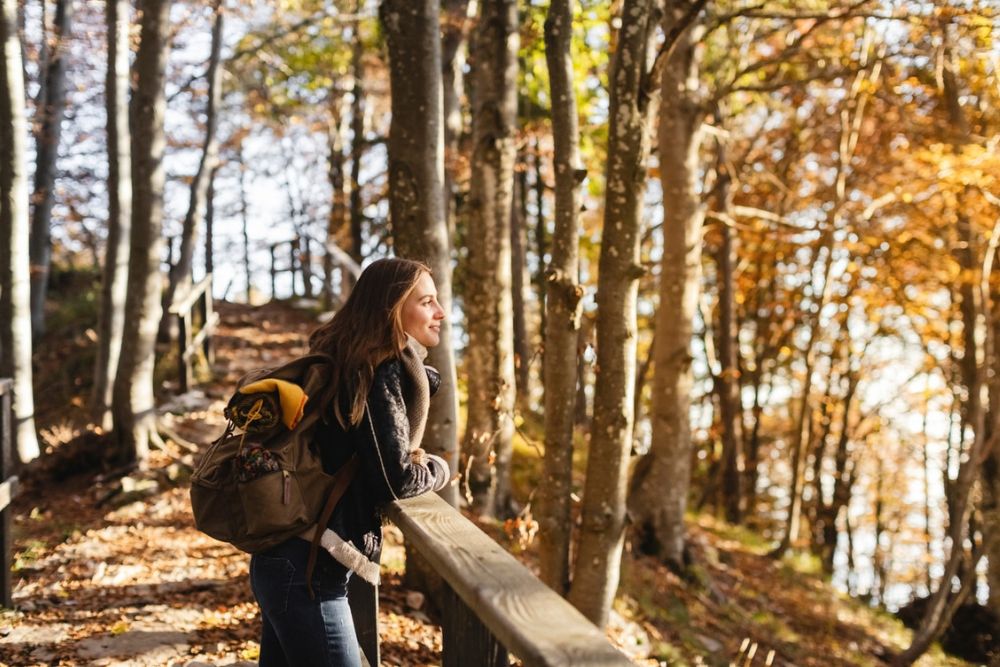
Imagine taking a walk without checking the time, counting your steps, reaching a destination, or wondering how many calories you have burned. Instead, you notice the scent of damp soil, the sound of branches moving overhead, the warmth of sunlight, or the texture of a tree trunk beneath your fingertips. This is the essence of shinrin-yoku, the Japanese practice commonly translated as forest bathing. Its purpose isn’t to accomplish more, but to experience more.
What Makes Forest Bathing Different From a Walk in the Woods?
While the power of nature on our health is well-documented, shinrin-yoku refers to taking in the atmosphere of the forest. Despite its name, you’re not actually bathing. First introduced in 1982, this practice centers on deliberately immersing yourself in a natural environment and paying attention to the experience.
That makes intention more important than distance. A conventional hike might involve a trail, destination, pace, or fitness objective. Forest bathing removes those expectations. You might walk slowly, sit beneath a tree, watch wildlife, listen to birds, or remain still while noticing changes in light and temperature. The goal isn’t to “perform” in nature correctly: it’s to become more receptive to it.
In 2004, Japanese scientists began research studies on the physiological changes taking place in “forest bathers” and what caused these changes. They observed lower cortisol, pulse rate, and blood pressure among participants in natural settings, along with changes associated with greater parasympathetic nervous system activity.
In 2012, M. Amos Clifford founded the Association of Nature and Forest Therapy in the U.S. in 2012. The purpose of a guide is to assure participants’ safety and relaxation while offering activity invitations as an open structure that makes it easy for people to set aside their phones, worries, and stress and enter a restorative state for a couple of hours.
Could Forest Bathing Change Your Mood?
Possibly. A 2023 systematic review and meta-analysis of 36 studies involving 3,500 participants found that forest bathing was associated with reduced symptoms of anxiety and depression.
So if you’re mentally overloaded, the value of forest bathing may also come from having fewer demands placed on attention. Rather than switching between emails, conversations, advertisements, and notifications, you can focus on something uncomplicated: leaves moving in the wind, for example, or the sound of trickling water nearby. This shift creates a sense of mental spaciousness. You’re not necessarily solving a problem, but there’s an advantage to giving yourself temporary distance from it.
Are There Physical Benefits?
Research has also explored potential cardiovascular effects. Some forest bathing studies involving adults with prehypertension or hypertension found associations with lower blood pressure and pulse rate. Another meta-analysis found lower systolic and diastolic blood pressure in forest environments compared with nonforest environments.
The evidence is encouraging but should be interpreted carefully. Studies vary in design, duration, participants, and type of forest exposure. Forest bathing can complement healthy habits and medical care, but it shouldn’t replace treatment prescribed for hypertension, anxiety, depression, or other conditions.
How Can You Gain a Fresh Perspective by Forest Bathing?
You don’t need a remote wilderness or a carefully planned retreat. Kaiser Permanente notes that a park, local trail, or other natural setting can work, and recommends silencing devices and focusing deliberately on the present moment.
Begin by choosing a safe natural area and permitting yourself to move slowly. Leave the fitness tracker and schedule alone if doing so helps you stay in the moment more easily.
- Notice five things you can see nearby.
- Listen for sounds in the distance and close to you.
- Pay attention to scents, textures, temperature, and the sensation of your feet moving across the ground.
There’s no required route. Sit if you want. Stop frequently. Let curiosity determine where your attention goes. Also look for moments of awe—those brief experiences of wonder that can make familiar surroundings feel new.
Perhaps the most valuable part of shinrin-yoku isn’t what you leave behind, but what becomes more visible when you stop rushing. A familiar trail may suddenly reveal birdsong you had never noticed, intricate patterns in bark, or sunlight moving across the forest floor—all because you slowed down enough to notice.
This is how you learn to expand your perspective beyond the forest. A few quiet moments don’t erase life’s problems, but they may give you enough distance to return to them differently.
You, Only Better, at Ivory Plains
Forest bathing is ultimately a simple invitation: step away from constant demands, pay attention to where you are, and allow nature to occupy your senses for a while. Sometimes, changing your surroundings is enough to help you see the rest of your life with slightly clearer eyes.
At Ivory Plains’ inclusive addiction rehabilitation program in Adair, Iowa, our board-certified professionals are proud to offer you evidence-based treatment combined with various holistic approaches that help you design a healthier life with confidence. Talk to a member of our admissions team to learn more.